
Wear materials
Pick the grade against the duty, not the price list
Crusher liner performance depends on the complete alloy specification, heat treatment, geometry and operating duty. Mn13Cr2, Mn18Cr2 and Mn22Cr2 identify nominal manganese/chromium families, not fixed hardness or wear-life guarantees.
We would rather sell you the grade that gets through the campaign than the cheapest one on the quote. Send us the feed, the throughput and how long your last set lasted.
- Four grades from Mn13Cr2 through to titanium-carbide composite
- Work-hardening behaviour explained in plain terms
- Honest cost-per-tonne comparison against your real numbers
- Liners for crushers, chutes, hoppers and transfer points
Material grades
The four grades we supply
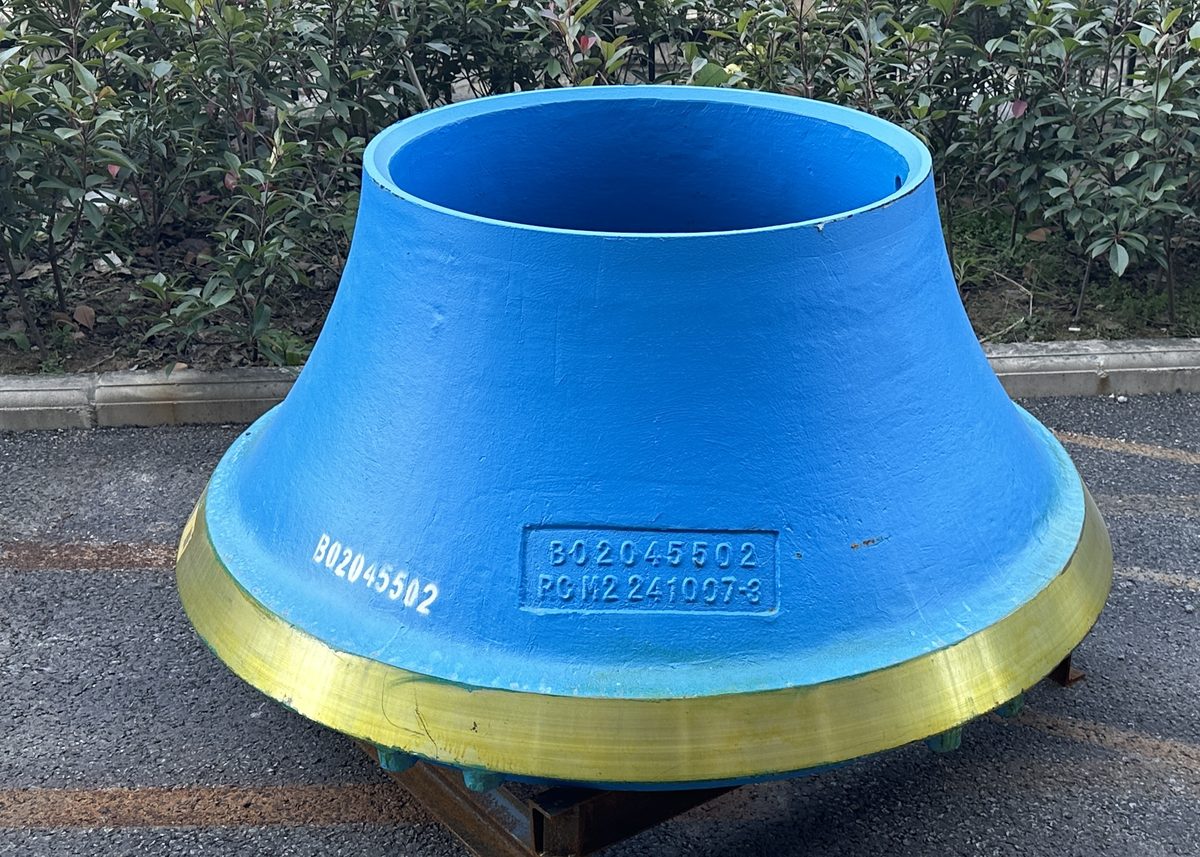
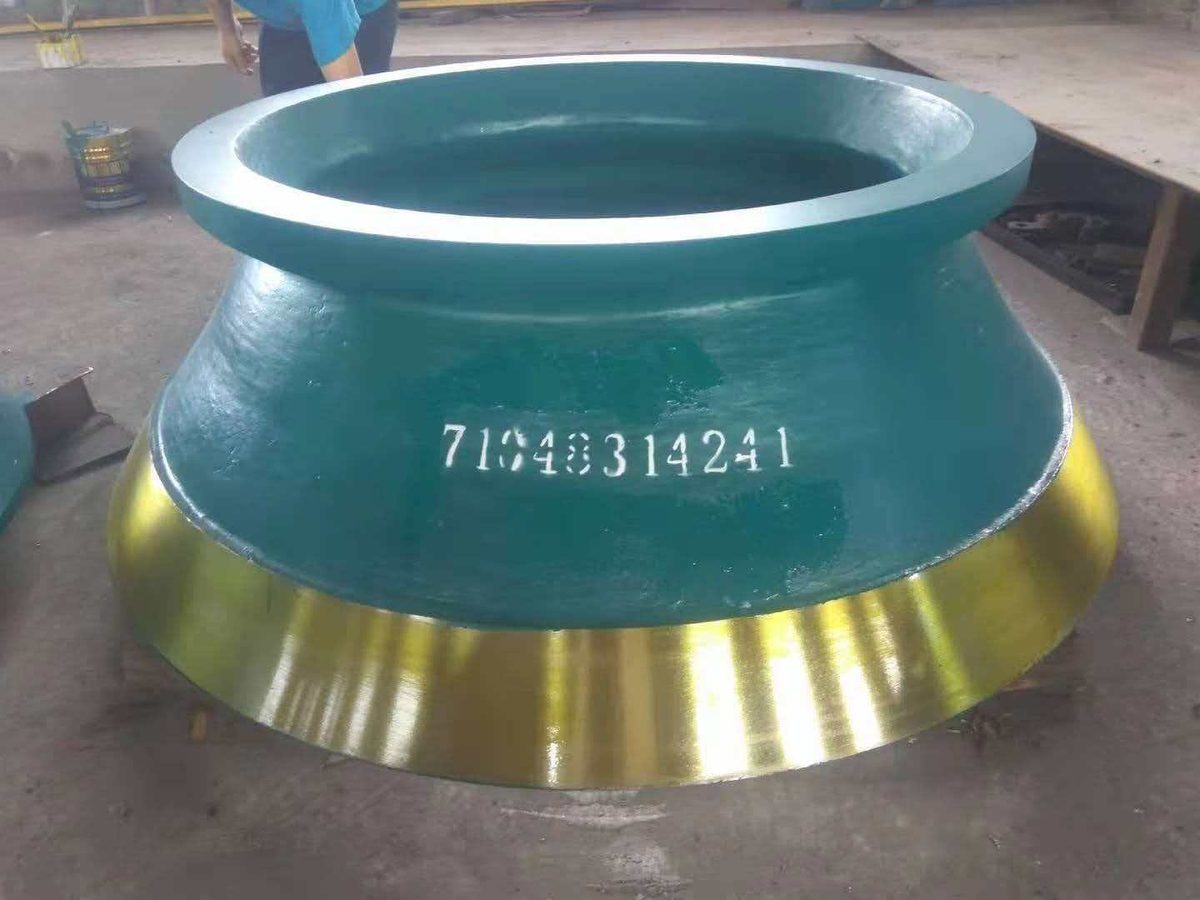
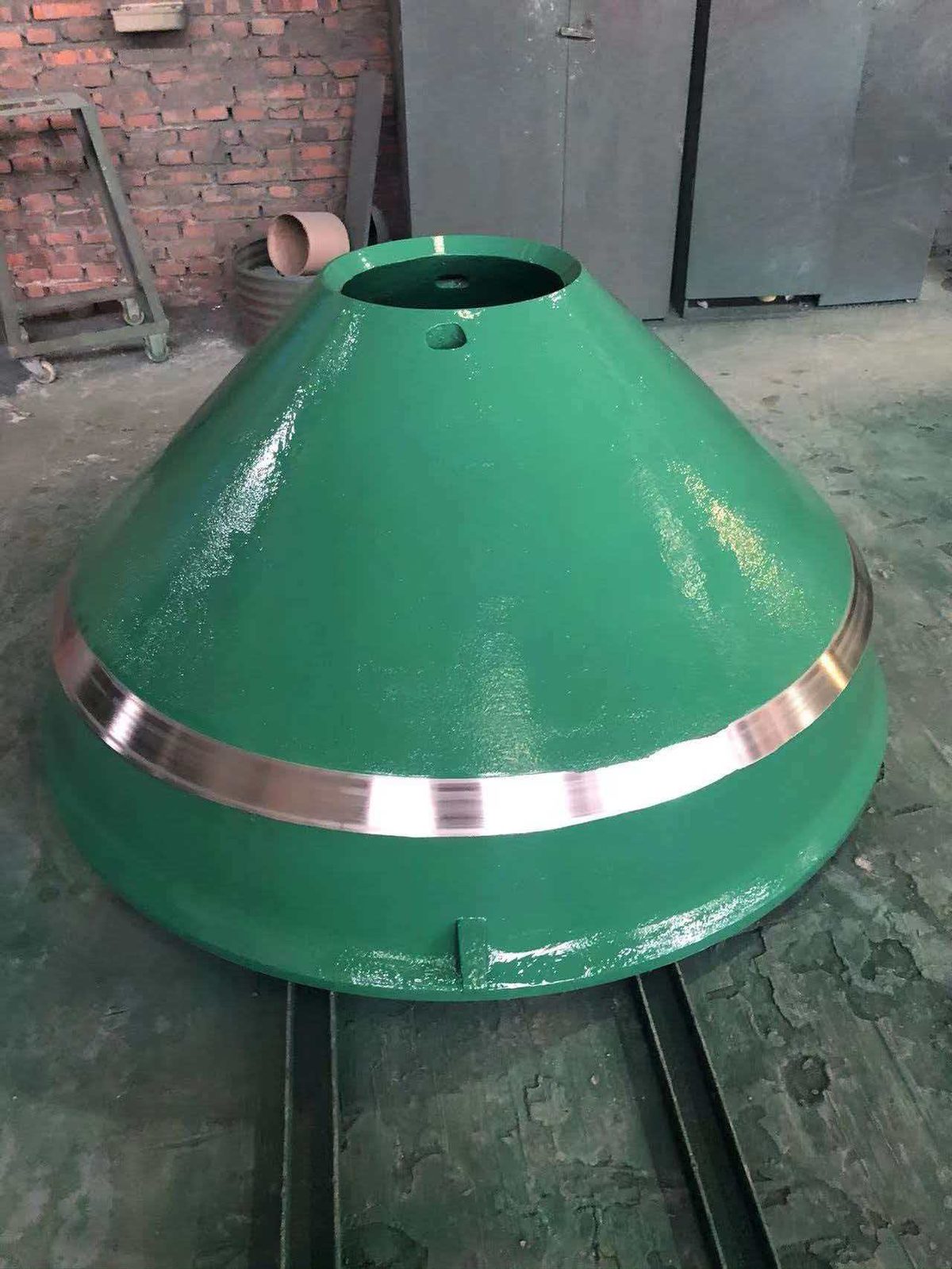
Material grade and available chemistry, heat-treatment and hardness records are confirmed for the quoted liner. A photograph alone cannot verify alloy or reinforcement type.
- Nominal 13% manganese family; toughness requires the full specification
- Acceptance hardness: agreed specification and batch test
- Select for the impact duty; no liner is guaranteed against tramp-metal damage
- Surface hardening depends on service stress and deformation
- Choose for primary and secondary feeds with impact loading
- Nominal 18% manganese family for application review
- Acceptance hardness: agreed specification and batch test
- Balanced toughness and abrasion resistance
- Surface hardening depends on service stress and deformation
- Evaluate using the actual feed and operating history
- Nominal 22% manganese family; carbon must be separately specified
- Acceptance hardness: agreed specification and batch test
- Wear performance requires application-specific comparison
- Surface hardening depends on service stress and deformation
- Choose for hard-rock quarry and iron ore secondary crushing
- Titanium-carbide reinforcement in a specified matrix
- Wear-life improvement must be established by a comparable site trial
- Reinforcement is intended to improve resistance in suitable wear zones
- Compare installed cost and measured tonnes processed
- Confirm suitability with the supplier and site data
Comparison
Grades side by side
This guide compares nominal material families. Acceptance hardness and chemistry must come from the agreed specification and batch records, not a generic marketing range.
| Family | What to verify | Application review |
|---|---|---|
| Mn13Cr2 | Full chemistry, solution treatment and batch hardness | Impact and abrasion duty; grade alone does not establish performance |
| Mn18Cr2 | Full chemistry, solution treatment and batch hardness | Feed, chamber profile and measured campaign wear |
| Mn22Cr2 | Carbon and manganese levels, heat treatment and batch hardness | Higher nominal manganese does not guarantee longer life |
| TiC composite | Matrix, reinforcement composition and placement | Supplier assessment and comparable site-trial results |
Work hardening
How manganese work-hardens in service
Properly solution-treated austenitic manganese steel combines toughness with a capacity to work-harden under plastic deformation. Dislocation activity and deformation twinning contribute to surface hardening while the core retains toughness.
Work-hardening depends on the stress and deformation generated in service. Low-stress abrasion may not develop sufficient surface hardening. Alternative materials or composites require application-specific assessment.
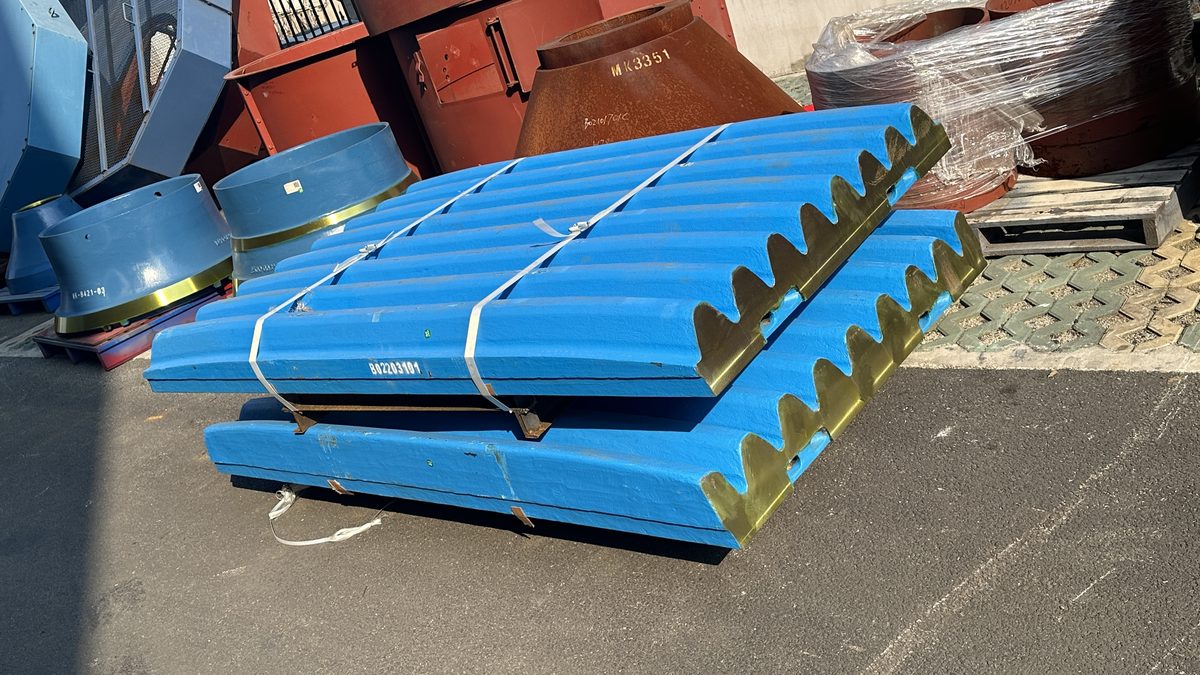
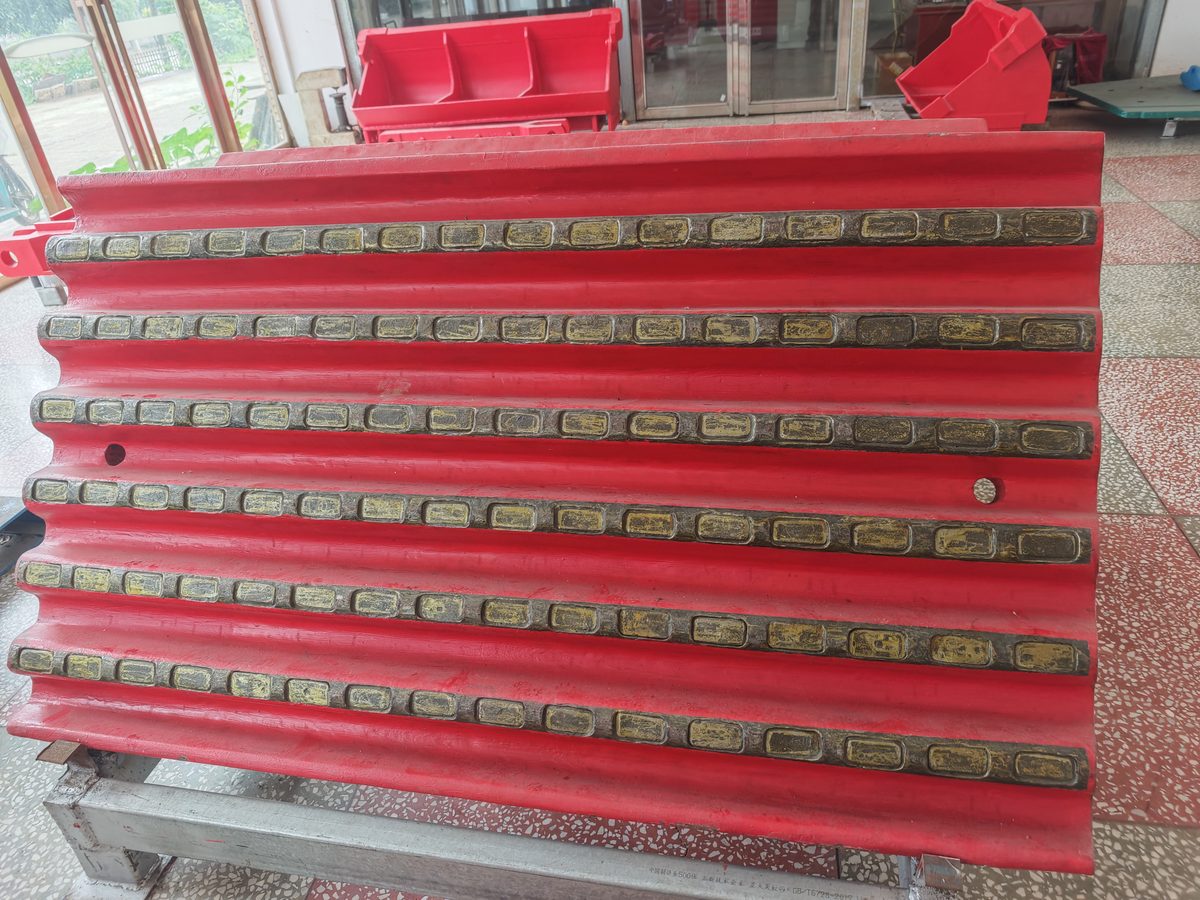
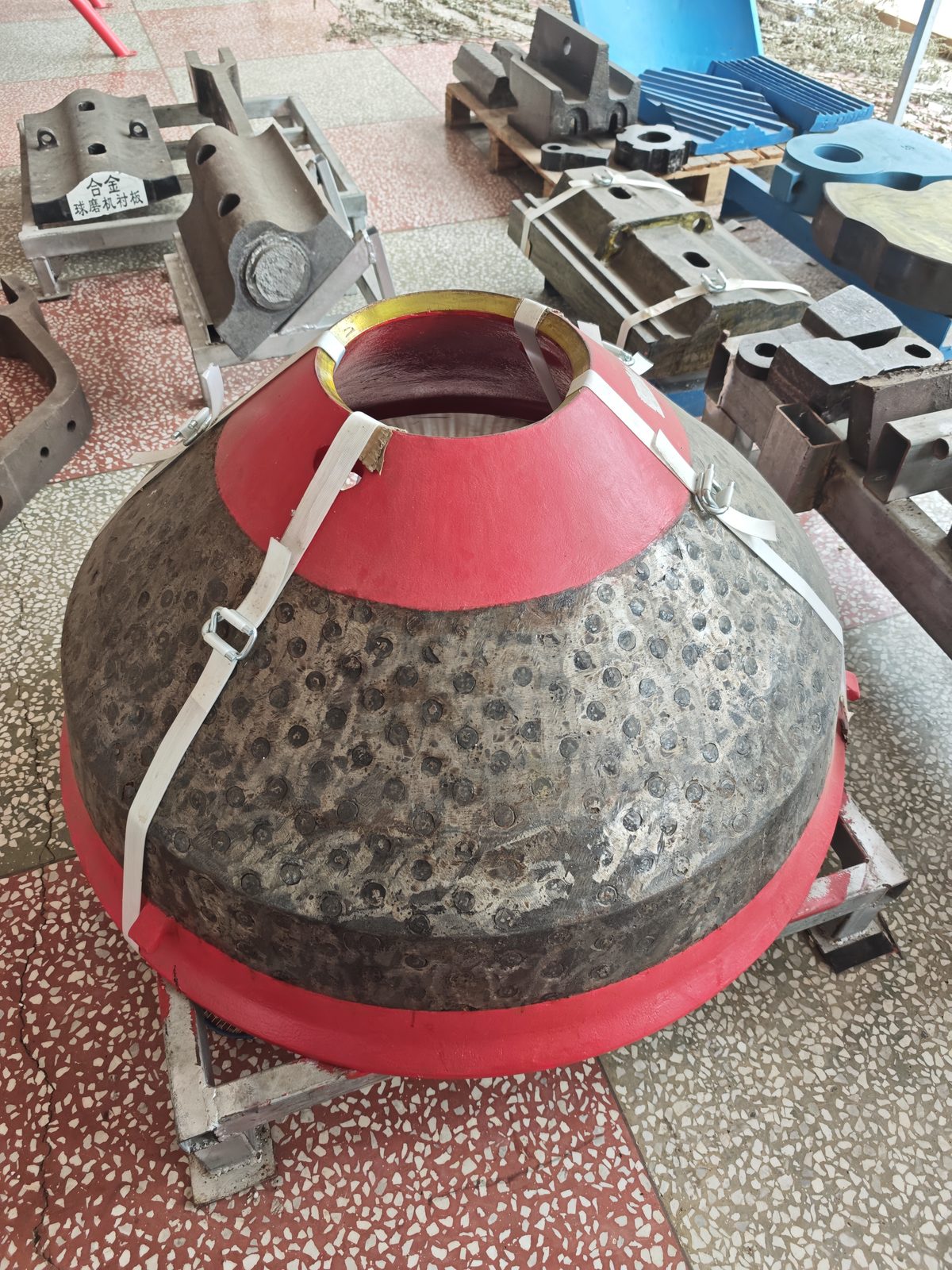
Product photographs
Wear part examples
Click any image to view it larger.
Questions
Wear materials, answered
The metallurgy questions customers actually ask.
Manganese crusher liners are normally supplied after the specified solution heat treatment. The austenitic steel work-hardens through plastic deformation, including dislocation activity and twinning. Surface hardening depends on the stress and strain generated in service.
The amount of surface hardening depends on feed, load, geometry and operating conditions. Select the material from duty and measured wear history rather than assuming one alloy performs best everywhere.
TiC reinforcement may improve abrasion resistance in a suitable liner design. Its benefit depends on the matrix, reinforcement layout and operating duty. Compare measured campaign tonnage and total installed cost; no universal service-life multiplier is promised.
Tell us your feed, throughput, campaign length and last liner life in tonnes. That is enough for us to run the comparison with you honestly.
You should, and we encourage it. A liner that costs 40% more but lasts twice as long is cheaper per tonne crushed, before you even count the shutdown you did not have to take. Give us your last set’s tonnage and we will build the comparison around your real numbers rather than a generic table.
Yes. Beyond cone and jaw liners we supply chute liners, hopper and bin liners, skirtboard rubber, transfer point liners and wear plate for bulk handling applications. Send us a drawing or a photograph of the worn item with its dimensions and we will quote it in the grade that suits the duty.
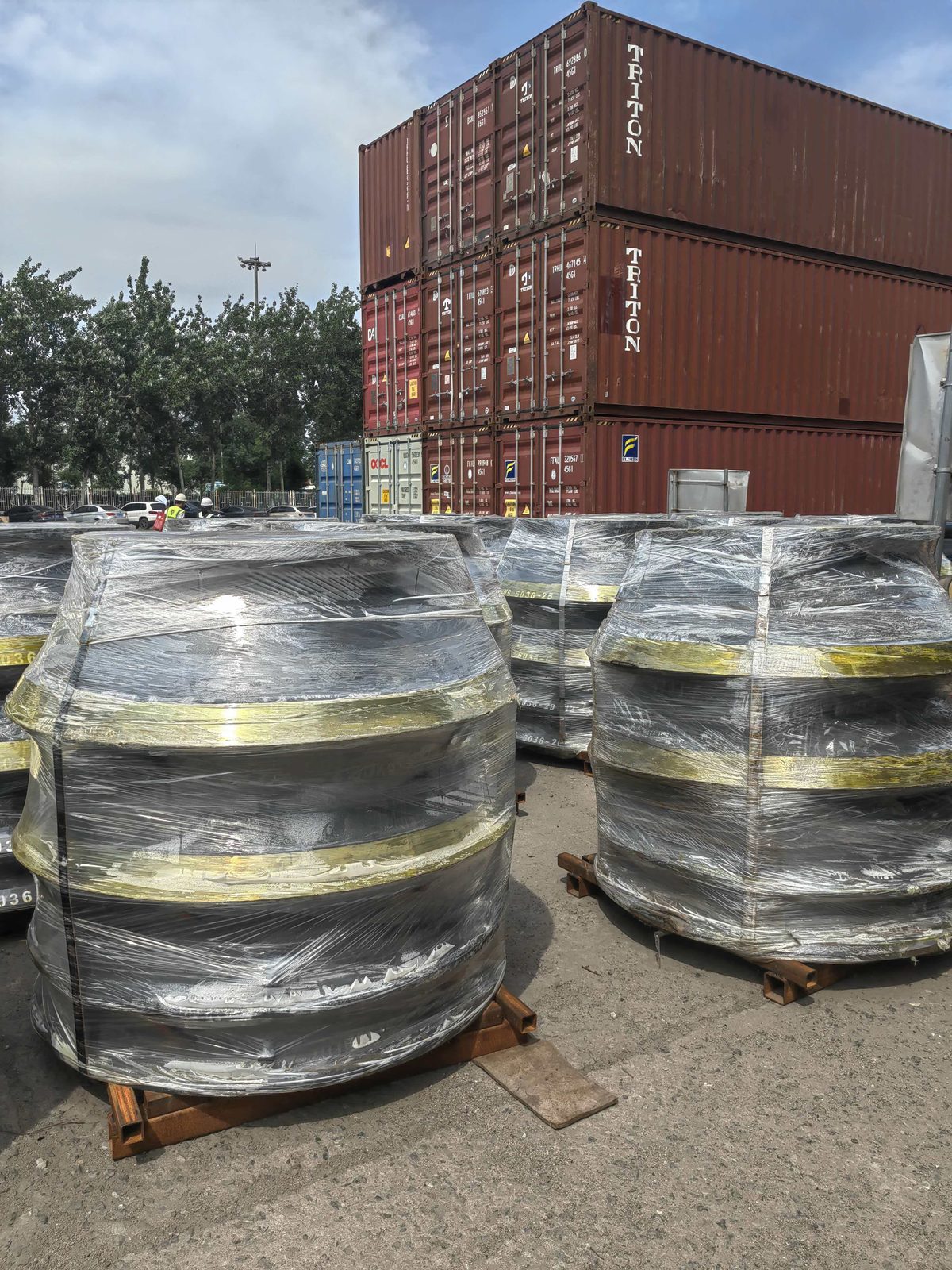
Documentation varies by product and agreed inspection scope. Material certificates, dimensional records, hardness results and pre-dispatch photographs can be specified where applicable.
Send us the duty and we will recommend the grade
Feed material, throughput, campaign length and how long your last set lasted in tonnes. That is enough to make an honest recommendation.